
How to Choose a Reliable DTF Supplier for Your Business
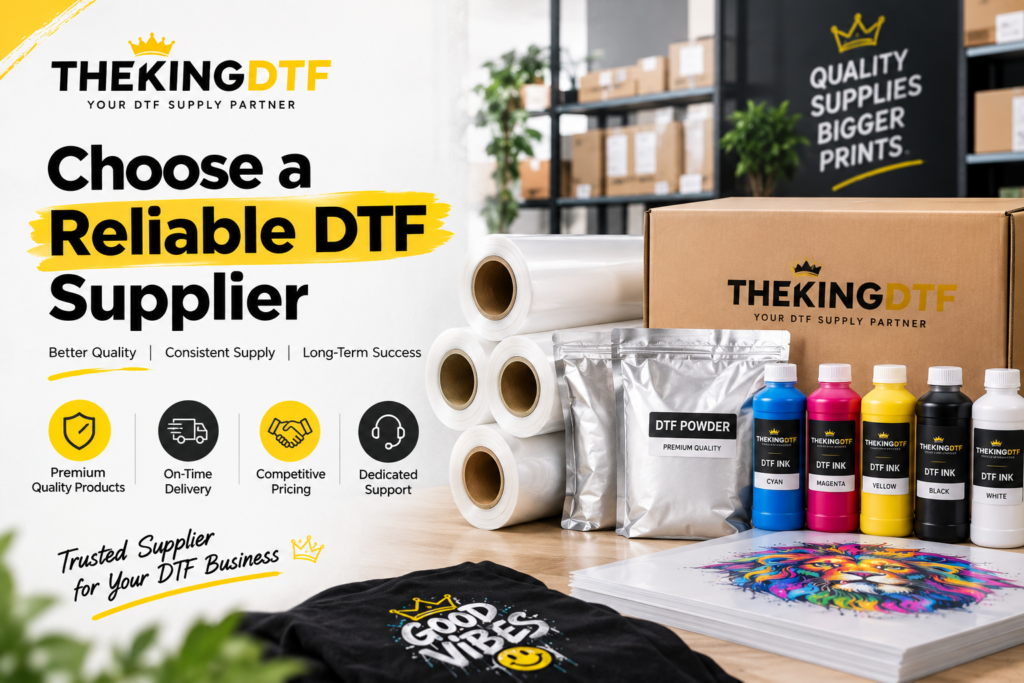
Choosing a reliable DTF supplier is an important decision for any business that depends on Direct-to-Film printing materials. The right supplier can make purchasing more organised by providing clear product information, transparent quotations, and dependable communication. However, selecting a supplier requires more than comparing prices or browsing a product catalogue.
For printing businesses, garment manufacturers, and wholesale buyers, a supplier should understand commercial purchasing requirements and provide the information needed to evaluate products before ordering.
In this guide, we will explain what to look for when choosing a DTF supplier, which questions to ask before placing an order, and how to assess whether a supplier is suitable for your business.
Why Does Your Choice of DTF Supplier Matter?
DTF printing businesses rely on materials such as transfer film, printing ink, and hot-melt adhesive powder. If a product is unavailable when needed, has unclear specifications, or does not suit your printing setup, it can create difficulties in your purchasing and production process.
A suitable supplier can help make procurement easier by offering clear product details, explaining available options, and communicating order requirements.
When evaluating a supplier, consider the complete purchasing experience rather than focusing on a single factor. Product suitability, order terms, delivery arrangements, and communication all contribute to an informed buying decision.
1. Check the Supplier’s Product Range
Start by reviewing the products a supplier offers. Depending on your business requirements, you may need DTF film rolls, printing ink, adhesive powder, or several of these materials.
A supplier’s product range should be relevant to your purchasing needs. However, a larger catalogue does not automatically mean that every product will suit your equipment.
Check whether the supplier provides useful details about each product, such as:
Available sizes and packaging options
Product specifications and intended applications
Compatibility information, where applicable
Handling and storage instructions
Minimum order quantities
Clear product information helps you shortlist products before requesting a quotation.
2. Evaluate Product Information and Specifications
Before placing an order, make sure you understand what you are purchasing. Product names and photographs alone may not provide enough information to compare different materials.
For DTF film, check the available dimensions, coating details, and intended use. For printing ink, review the formulation and compatibility information. For adhesive powder, confirm the relevant product specifications and application requirements.
If any information is missing, ask the supplier for clarification.
This step is particularly important when comparing quotations from different suppliers. Two products may appear similar but have different specifications, packaging sizes, or intended applications.
A reliable purchasing decision begins with knowing whether the product matches your business requirements.
3. Look for Transparent Wholesale Quotations
Wholesale buyers need clear information about the total cost of an order. A quotation should identify the product, quantity, applicable unit price, and relevant order terms.
Before confirming a purchase, clarify:
Minimum order quantity (MOQ)
Available bulk quantities
Packaging and product specifications
Shipping or delivery charges
Applicable taxes, where relevant
Payment terms
Estimated dispatch and delivery timelines
Do not compare suppliers using the quoted unit price alone. The total payable amount and the suitability of the product are also important.
Requesting written quotations makes it easier to compare equivalent products and maintain records for future purchases.
4. Ask About Product Samples or Testing Options
When considering a new supplier or unfamiliar product, ask whether samples or smaller trial quantities are available.
Testing can help you evaluate whether a material is suitable for your printer, ink, adhesive powder, and transfer process before placing a larger order.
Depending on the product, your evaluation may include checking handling, compatibility, packaging, and performance under the manufacturer’s recommended conditions.
Keep a record of your observations and the product specifications. This can help you compare products more consistently.
Sample availability varies by supplier, so confirm the relevant terms before making assumptions about testing options.
5. Understand Minimum Order Quantities
Not every business has the same purchasing capacity. A small printing operation may require smaller quantities, while a larger production unit may regularly purchase materials in bulk.
Before choosing a supplier, understand the minimum order quantity for each product and whether different products have separate order requirements.
Consider your expected consumption, available budget, and storage capacity when evaluating these quantities.
Ordering more material than your business can reasonably use or store may create unnecessary inventory pressure. On the other hand, purchasing too little can mean more frequent replenishment.
A suitable supplier should provide enough order information for you to plan purchases according to your requirements.
6. Check Delivery and Order Fulfilment Terms
Delivery arrangements can affect how easily your business manages stock. Before placing an order, ask about dispatch timelines, delivery estimates, shipping charges, and how order quantities are confirmed.
For recurring purchases, consider how the supplier communicates any changes to availability or delivery schedules.
It is also useful to clarify what happens if an order arrives with damaged packaging, missing quantities, or a product different from the one ordered.
Ask for the supplier’s documented process for reporting these issues. Understanding the procedure before purchasing can help avoid confusion later.
7. Assess Communication and Customer Support
Clear communication is an important part of a business-to-business relationship.
Notice whether the supplier answers product questions clearly, provides the requested specifications, and explains order terms without leaving important details unresolved.
Before placing an order, you should be able to understand what is being supplied, how much it costs, what quantity is required, and how delivery will be handled.
A supplier’s response to reasonable questions can help you assess whether the purchasing process is likely to meet your needs.
Keep important discussions, quotations, and order confirmations in writing so that the agreed terms are easy to reference.
8. Review Business Details and Ordering Procedures
Before making a substantial purchase, review the supplier’s available business information and ordering procedures.
Depending on the transaction, useful details may include the business name, contact information, invoice arrangements, payment instructions, and applicable commercial terms.
Make sure the payment recipient and order details match the information provided by the supplier. Be cautious if important details remain unclear or if you are pressured to pay without receiving basic order information.
For larger transactions, take the time to verify the relevant business details and understand the applicable terms before committing funds.
9. Build a Long-Term Supplier Relationship
Once you find a supplier whose products and purchasing terms suit your business, maintaining clear records can make repeat orders easier.
Record product specifications, previous quotations, order quantities, delivery details, and any relevant feedback from your production team.
Before every repeat purchase, confirm that the product specifications, pricing, availability, and delivery terms have not changed.
A long-term relationship can make procurement more organised, but it is still important to review each order carefully and keep your purchasing records up to date.
10. Use a Checklist Before Placing Your Order
Before confirming your next DTF supply order, review this simple checklist:
Have you confirmed the exact product and specifications?
Does the product suit your printing requirements?
Have you checked the minimum order quantity?
Is the complete quotation clear?
Are delivery timelines and shipping charges understood?
Have you reviewed payment and invoice terms?
Do you understand the procedure for damaged or incorrect orders?
Have you checked your current inventory and expected usage?
If important questions remain unanswered, request clarification before confirming the purchase.
Find a Wholesale DTF Supplier at thekingDTF
At thekingDTF, we cater to businesses looking for DTF printing supplies in wholesale quantities. Our product range includes DTF film rolls, DTF printing ink, and hot-melt adhesive powder.
We understand that wholesale buyers need clear product information to evaluate materials, plan order quantities, and request relevant quotations.
If you are sourcing DTF supplies for your printing business, contact thekingDTF to discuss your product requirements, available specifications, order quantities, and current wholesale pricing.
Sharing your requirements helps us understand which products and quantities you are looking for.
Frequently Asked Questions
1. What should I look for in a DTF supplier?
Review product specifications, wholesale order terms, minimum order quantities, delivery arrangements, communication, and the supplier’s process for handling order issues.
2. Should I compare multiple DTF suppliers?
Comparing quotations from multiple suppliers can help you evaluate equivalent products, pricing, order terms, and availability before making a purchasing decision.
3. What is MOQ in wholesale purchasing?
MOQ stands for Minimum Order Quantity. It is the minimum quantity a supplier requires for a particular order or product.
4. Should I request a sample before placing a bulk order?
Where samples or trial quantities are available, testing an unfamiliar product can help you assess its suitability before committing to a larger purchase.
5. How can I request a wholesale quotation from thekingDTF?
Contact thekingDTF with the products you require, relevant specifications, and approximate order quantities to discuss current availability and wholesale pricing.
Make Your Next DTF Supply Purchase With Confidence
Choosing a DTF supplier involves checking product information, comparing complete quotations, understanding delivery terms, and evaluating how well the supplier communicates with your business.
A structured purchasing process can help you compare options and make decisions based on your actual requirements rather than price alone.
Looking for DTF film rolls, printing ink, or adhesive powder in bulk? Contact thekingDTF to discuss your wholesale requirements and request a quotation.
thekingDTF — Wholesale DTF Printing Supplies for Your Business.