
How to Store DTF Supplies Properly: A Guide for Printing Businesses
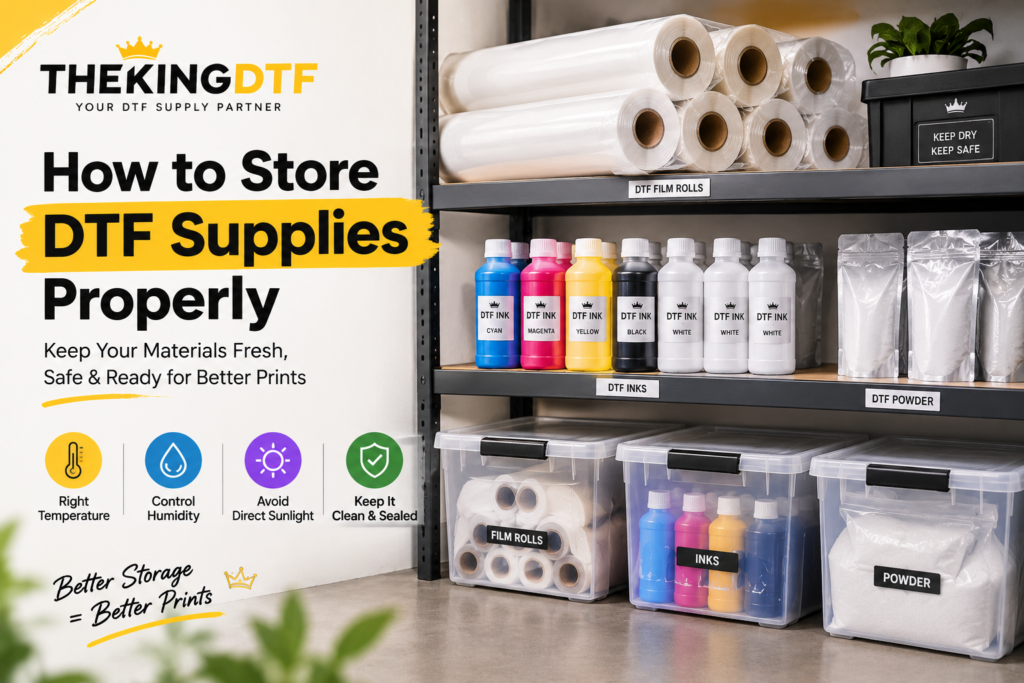
Proper DTF supplies storage is an important part of managing a printing business. DTF film rolls, printing ink, and hot-melt adhesive powder each have their own handling and storage requirements. If these materials are stored incorrectly, they may become difficult to use, get damaged, or fail to perform as expected.
For printing businesses, garment manufacturers, and wholesale buyers, organised storage helps keep materials accessible and makes stock management easier. Whether you maintain a small inventory or purchase supplies in bulk, having a clear storage routine can help you manage your materials more effectively.
In this guide, we will explain how to organise DTF supplies, what to consider when storing different products, and how to maintain a practical inventory system for your business.
Why Is Proper DTF Supplies Storage Important?
DTF printing businesses often keep several materials in stock at the same time. These may include film rolls, different ink colours, and adhesive powder. Each product may have different storage instructions, packaging requirements, and shelf-life considerations.
A suitable storage system can help your business:
Keep products organised and easy to identify
Reduce the risk of accidental damage
Monitor stock levels more effectively
Identify products approaching their expiry or recommended-use date
Plan future purchases based on actual requirements
Reduce confusion when handling different product specifications
Storage requirements vary by product, so always follow the instructions supplied by the manufacturer.
1. How to Store DTF Film Rolls
DTF film rolls need appropriate handling to protect the material and keep it in suitable condition before use. Dust, moisture, physical damage, and unsuitable environmental conditions may affect film handling or its intended performance.
Follow these practical steps when storing DTF film rolls.
Keep Film in Its Original Packaging
Whenever possible, retain the original packaging until the film is ready to be used. Packaging can help protect the roll from dust and accidental contact with other materials.
If a roll has been opened, follow the supplier’s instructions for protecting and resealing it.
Protect Film From Dust and Moisture
Store film in a clean, dry area that meets the manufacturer’s recommended environmental conditions. Avoid placing unprotected rolls near dusty workstations or locations where water may come into contact with the material.
Avoid Physical Damage
Keep film rolls away from sharp objects, heavy items, and areas where they may fall or become crushed. Handle rolls carefully when moving them between storage and the printer.
Label Different Film Types
If your business uses several film specifications, label the storage locations or packages clearly. This helps staff select the correct material and reduces the possibility of mixing products.
2. How to Store DTF Printing Ink
DTF printing ink requires careful handling because its storage conditions can influence its suitability for use. Different formulations may have different requirements, so the product label and manufacturer’s instructions should always take priority.
Follow the Recommended Temperature
Check the recommended storage temperature for each ink product. Avoid storing ink in places exposed to excessive heat, freezing conditions, or sudden environmental changes if the manufacturer advises against them.
Keep Bottles Properly Closed
Close ink containers securely after use and follow the manufacturer’s instructions for handling opened bottles. This helps reduce contamination and unwanted exposure to the surrounding environment.
Organise Ink by Colour
Keep ink bottles clearly identified and arrange them so that each colour can be found easily. This is particularly useful when your business stocks multiple colours or keeps backup inventory.
Check Product Dates
Review the manufacturing date, expiry date where provided, and any recommended-use period after opening. Do not assume that unopened ink can be stored indefinitely.
Follow Handling Instructions
Use only the handling and maintenance procedures specified for the product and your printing equipment. If you notice unusual changes in the ink or are unsure whether it remains suitable for use, contact the supplier or manufacturer before using it.
3. How to Store DTF Adhesive Powder
DTF hot-melt adhesive powder should be stored according to its product-specific instructions. Moisture exposure and unsuitable storage conditions can affect the powder’s handling characteristics.
Keep Powder in Suitable Packaging
Store powder in its original container or another package approved for the product. Close the packaging securely after use, following the supplier’s instructions.
Protect It From Moisture
Keep powder in a storage area that meets the recommended humidity and environmental conditions. Avoid leaving opened packaging exposed on a production table for extended periods.
Use Clear Product Labels
If your business keeps different powder types, label them clearly. Record the product name and any batch details supplied by the manufacturer.
Maintain Clean Storage Areas
Keep powder away from unnecessary dust, spills, and unrelated materials. Follow the product’s safety instructions and use the recommended protective equipment when handling it.
Check Before Use
If the powder appears different from its expected condition or you suspect contamination or moisture exposure, consult the product documentation or supplier before using it in production.
4. Create an Organised DTF Storage Area
A dedicated storage area can make everyday work easier, especially when your business maintains several types of DTF supplies.
Start by dividing the space into separate sections for film rolls, ink, adhesive powder, and other printing materials. Use clearly marked shelves or storage locations so products can be returned to the correct place after use.
Keep storage areas clean and accessible. Arrange materials so that packaging labels remain visible and products are not exposed to accidental damage during routine movement.
It is also helpful to separate unused stock from materials currently being used in production. This makes it easier to identify available inventory and reduces unnecessary handling of unopened supplies.
5. Use a Stock Rotation System
When a business purchases DTF materials regularly, stock rotation can help prevent older inventory from being overlooked.
One simple approach is to use the First In, First Out (FIFO) method. Under this system, older stock is generally used before newer stock, provided it remains within the manufacturer’s recommended-use period and is suitable for use.
For products with expiry dates or specific storage restrictions, always follow the relevant product instructions.
Your stock records can include:
Product name and specifications
Quantity received
Date of purchase or receipt
Batch number, where available
Expiry or recommended-use date, where applicable
Quantity currently available
These details help you monitor inventory and plan replenishment more accurately.
6. Avoid Common DTF Storage Mistakes
Small storage mistakes can create unnecessary difficulties for a printing business. Keep these points in mind:
Do not ignore the manufacturer’s recommended storage conditions.
Do not leave opened containers unsealed when the product instructions require closure.
Do not store different materials together without clear identification.
Do not use products beyond their stated expiry or recommended-use period.
Do not overlook damaged packaging or signs of possible contamination.
Do not purchase quantities that exceed your practical storage capacity and expected usage.
A simple routine of checking packaging, labels, and storage conditions can help you identify problems earlier.
7. Plan Your Inventory Before Buying in Bulk
Bulk purchasing can be useful for businesses with regular material requirements, but the quantity ordered should match actual demand and available storage space.
Review your recent consumption and estimate how much film, ink, and powder you expect to use during the coming weeks or months. Then consider existing stock, expected customer orders, supplier lead times, and the storage conditions required for each product.
If your business experiences seasonal demand or frequent changes in order volume, avoid basing every purchase on your busiest period alone.
A practical inventory plan balances product availability with budget, storage space, and expected usage.
DTF Supplies for Wholesale Buyers at thekingDTF
At thekingDTF, we cater to businesses looking for DTF printing supplies in wholesale quantities. Our product range includes DTF film rolls, DTF printing ink, and hot-melt adhesive powder.
For businesses purchasing these materials in bulk, understanding product specifications and storage requirements is an important part of managing inventory.
If you are sourcing DTF supplies for your printing business, contact thekingDTF to discuss your required products, order quantities, availability, and current wholesale quotations.
Frequently Asked Questions
1. How should DTF supplies be stored?
Store each product according to its manufacturer’s instructions. Keep materials organised, protect packaging, and monitor relevant storage conditions and product dates.
2. Can DTF ink be stored in any room?
Not necessarily. Check the manufacturer’s recommended temperature and other storage conditions for the specific ink formulation.
3. How can I prevent DTF powder from being affected by moisture?
Follow the product’s storage instructions, keep packaging securely closed as directed, and maintain the recommended environmental conditions.
4. What does FIFO mean in DTF inventory management?
FIFO means First In, First Out. It is a stock rotation method in which older suitable inventory is generally used before newer stock, subject to product dates and instructions.
5. How much DTF stock should a business maintain?
The appropriate quantity depends on material consumption, expected orders, supplier lead times, budget, and storage capacity.
Keep Your DTF Supplies Organised
Proper storage and inventory management can help printing businesses maintain a more organised workflow. By following product-specific instructions, labelling stock clearly, monitoring product dates, and planning bulk purchases carefully, you can manage DTF materials more effectively.
Looking for DTF film rolls, printing ink, or hot-melt adhesive powder in wholesale quantities? Contact thekingDTF to discuss your business requirements.
thekingDTF — Wholesale DTF Printing Supplies for Your Business.